
Why AI-Generated Adult Content Feels Different From Traditional Platforms
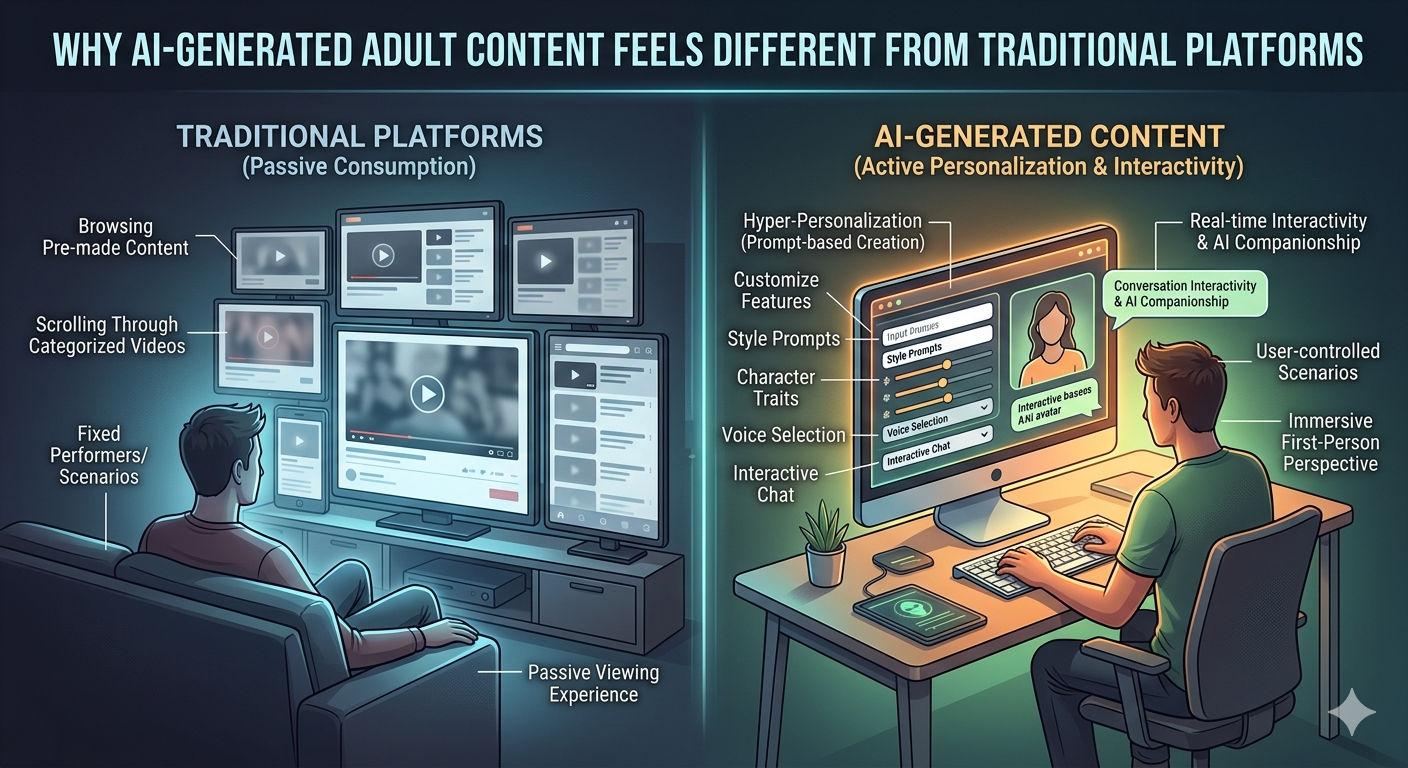
Most adult websites still operate on a fairly old internet model. Massive libraries, category pages, recommendation grids, endless thumbnails. The basic structure hasn’t changed much in years because, technically, it still works.
But something interesting has happened recently.
People started getting bored faster.
Not necessarily with adult content itself, but with the routine surrounding it. Open a site, scroll for five minutes, open new tabs, lose interest, close everything. The process became almost automatic.
That’s one reason AI-generated formats started pulling attention away from traditional browsing patterns. They changed the rhythm of the experience.
The Internet Has Become More Interactive Everywhere
Outside the adult industry, almost every major platform already revolves around interaction.
Social media feeds react to behavior. Streaming services personalize recommendations. Games constantly adapt to player decisions. Even shopping websites now feel more dynamic than static.
Users became accustomed to systems responding to them in some form.
Adult platforms, meanwhile, stayed surprisingly passive for a long time. You searched for something that already existed instead of influencing the experience directly.
AI-assisted tools shifted that dynamic a little.
Not completely. But enough for people to notice.
Curiosity Became More Important Than Search
One thing that stands out with AI-generated systems is how much they rely on curiosity rather than direct intent.
Traditional browsing usually starts with users looking for something specific. Interactive generation works differently. A lot of sessions begin with experimentation instead of searching.
People test ideas. Retry prompts. Explore variations they wouldn’t normally look for manually.
The process itself becomes entertaining.
That probably explains why conversations around porn gen platfor ms continue growing across online communities. Users are drawn to experiences that feel less fixed and more exploratory, even when the results are inconsistent.
Maybe especially when they’re inconsistent.
Perfect Consistency Isn’t Always Engaging
Traditional adult productions aim for reliability. Predictable quality, polished visuals, controlled outcomes.
AI-generated systems don’t really operate that way yet.
Sometimes outputs look surprisingly polished. Other times they’re awkward, uneven, or slightly off in ways that are hard to explain. But strangely, that unpredictability can make the interaction feel more alive.
Users stop feeling like they’re scrolling through identical content loops.
After years of highly optimized browsing experiences, randomness itself starts becoming interesting again.
Smaller Communities Usually Notice Trends First
Like most internet shifts, this one didn’t start on major platforms.
Smaller online communities picked it up first. Reddit threads, Discord servers, niche forums those spaces tend to experiment long before larger sites react. People share results, compare tools, discuss prompt styles, and collectively push trends forward without much coordination.
That grassroots momentum matters because internet culture spreads sideways now instead of top-down.
Platforms rarely create trends anymore. Communities do.
And once enough users become curious about something, larger platforms eventually start adapting around that behavior.
Why Static Browsing Feels More Exhausting Now
There’s also a broader attention issue happening online.
Users process massive amounts of content every day across dozens of platforms. Static browsing simply doesn’t hold attention the way it used to because people became too efficient at filtering it out mentally.
You can feel this after spending enough time on traditional adult sites. Everything starts blending together visually. Even new content feels familiar before you click it.
Interactive systems interrupt that autopilot effect.
Even small amounts of participation force users to engage differently.
Personalization Changes Expectations Quickly
The moment users experience some level of customization, expectations shift almost immediately.
That doesn’t mean everyone suddenly wants advanced controls or highly technical interfaces. Most people still prefer simplicity. But they do start expecting platforms to feel at least somewhat responsive instead of completely static.
That expectation spreads surprisingly fast once users get used to it.
And because AI-assisted systems naturally introduce variation, they fit neatly into those changing browsing habits.
Not Everyone Wants the Same Thing
At the same time, traditional content still dominates for obvious reasons.
A lot of users don’t want experimentation every session. Sometimes people prefer something quick, familiar, and predictable. Passive browsing still has its place because convenience matters online.
What’s happening now is more of a split in behavior patterns.
Some sessions become exploratory. Others remain direct and fast. Users move between both depending on mood, curiosity, or simply how much attention they want to spend.
The internet rarely replaces old behaviors completely. It layers new ones on top.
AI Content Is Changing Faster Than Platforms Can Adapt
One unusual thing about this space is how quickly tools evolve compared to the websites surrounding them.
Communities experiment faster than companies redesign interfaces. Users discover unexpected use cases before platforms even understand how people are interacting with the technology.
That creates a strange environment where trends constantly shift before they fully stabilize.
What feels experimental today often becomes normal browsing behavior a year later.
The internet has repeated this cycle over and over again.
The Line Between Entertainment and Experiment Keeps Blurring
A few years ago, adult content mostly revolved around consumption.
Now there’s increasing overlap with experimentation, customization, and interactive digital culture more broadly. That shift mirrors changes happening across gaming, streaming, and social platforms where participation matters almost as much as the actual content itself.
People increasingly want systems that react to them in some way.
Even lightly.
Even imperfectly.
Closing Thoughts
The growth of AI-generated adult content isn’t just about technology. It reflects a broader change in how internet users engage with digital media overall.
Static browsing still works, but curiosity-driven interaction keeps pulling more attention because it breaks repetitive patterns that traditional platforms struggled to solve for years.
Whether AI-assisted systems eventually dominate or simply remain one branch of online adult content almost doesn’t matter at this point.
The behavioral shift is already happening.
People don’t just want endless content anymore.
They want experiences that feel responsive enough to keep curiosity alive a little longer.